 Digital Sense

You have added FAQs. Installed a schema plugin. Published more blogs.
So why isn’t your business appearing where you want it to?
Because these three things do different jobs. Adding more of each does not automatically create better content or better visibility.
Here is how FAQs, schema markup and topical authority fit into a useful SEO and answer engine optimization strategy.
Which Matters Most for SEO and AI Search?
Start with credible, useful content. Use FAQs to resolve specific questions and structured data to describe relevant information accurately.
Treat topical authority as a long-term content goal: demonstrate that your business understands its subject through helpful explanations, original evidence and connected resources.
| Element | Main purpose | Practical priority | What it cannot guarantee |
| FAQs | Answer specific customer questions | Add where they resolve uncertainty | Rankings or AI citations |
| Schema markup | Describe page information in a standardized format | Implement relevant types accurately | Higher rankings or rich results |
| Topical authority | Build a useful body of expertise around a subject | Develop through original, connected content | Recognition after a fixed number of articles |
This priority order is an editorial recommendation, not a published ranking formula.
Are FAQs Still Important for SEO?
Yes when the questions help visitors understand something or make a decision.
A useful FAQ section answers concerns that the main page has not fully addressed.
For example, a website design service page could answer:
- Can I update the website myself?
- Who provides the photographs and written content?
- What happens after the website launches?
- Is ongoing maintenance included?
These questions address buying concerns. Repeating “Why are we the best agency?” in several forms adds little value.
Microsoft recommends clear headings, tables and FAQ sections to make information easier to reference accurately in AI answers. That supports clarity; it does not promise selection.
FAQ content and FAQ schema are different
FAQ content is the question and answer visitors read. FAQ schema is structured data describing that content.
Google stopped showing FAQ rich results from May 7, 2026. Its documentation confirms the feature’s removal. Advice promising expandable Google FAQ listings from adding FAQ schema is therefore outdated.
Keep useful answers because they serve customers not because you expect an enhanced search listing.
How Important Is Schema Markup?
Schema markup is useful technical support for your content. It cannot replace the content itself.
Structured data provides explicit information about what a page contains. Google uses supported markup to understand information and enable eligible search features.
Depending on your website, relevant types may include:
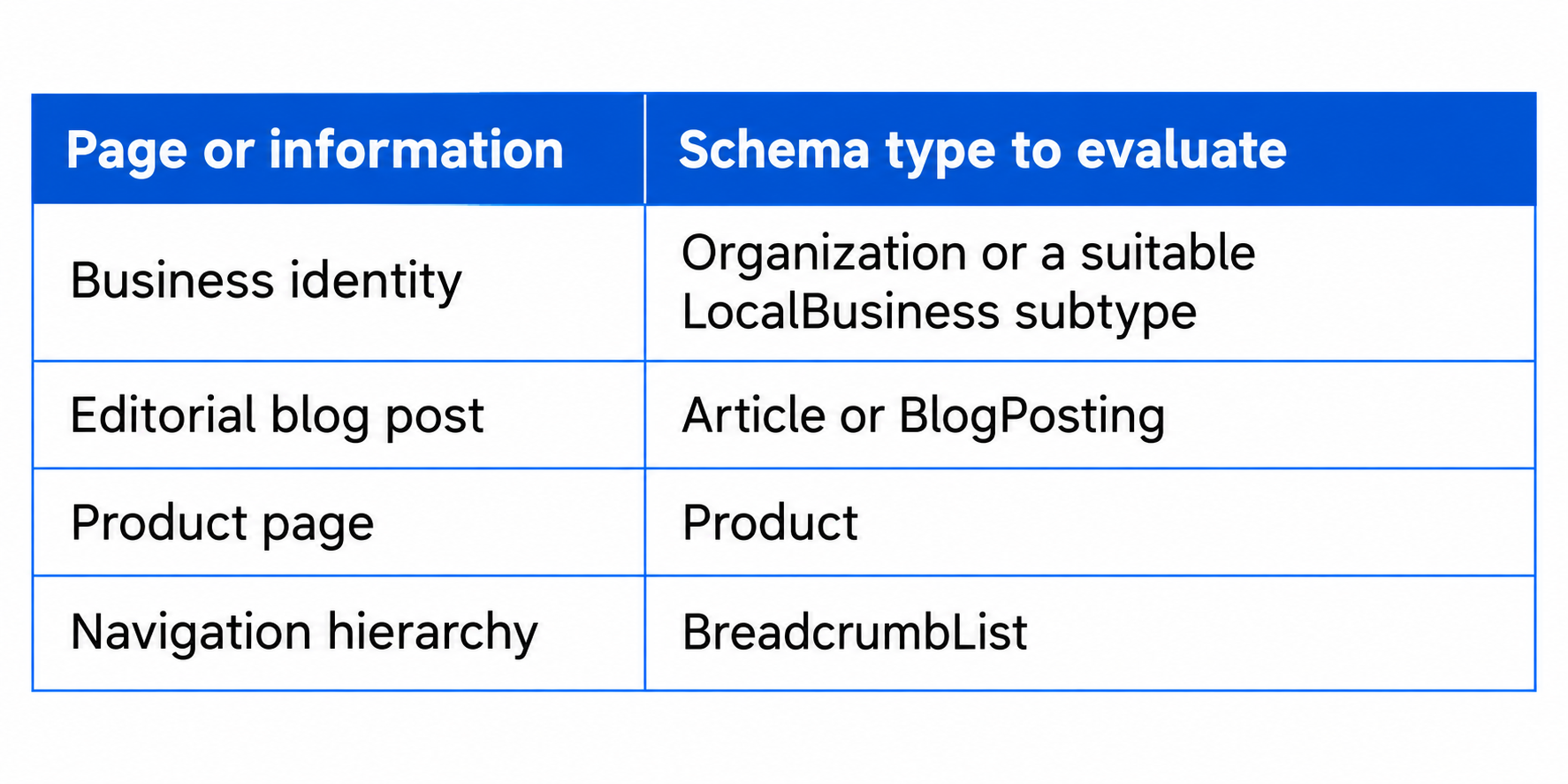
Choose types that accurately describe the page. Follow current documentation for any Google feature you want to qualify for.
Does schema help with AI search?
Avoid treating schema as an automatic AI visibility boost. Google says structured data is not required for its generative AI search features, and there is no special “AI schema” to add.
For implementation:
- Match the markup to visible, accurate information.
- Check what your CMS or SEO plugin already generates.
- Resolve conflicting or incorrect data.
- Validate supported Google features with the Rich Results Test.
- Use Schema.org’s validator for broader vocabulary checks.
Correct markup still does not guarantee a rich result.
What Is Topical Authority and How Do You Build It?
In SEO practice, topical authority describes a website’s demonstrated depth and credibility around a subject.
It is not a badge you earn by publishing 30 articles. Nor should a third-party authority score be treated as Google’s assessment.
Google has documented a specific topic authority system for news. That should not be confused with a universal score for every business website. For a small business, a practical approach is to build resources around questions you can answer well.
A website design company could organize its content like this:
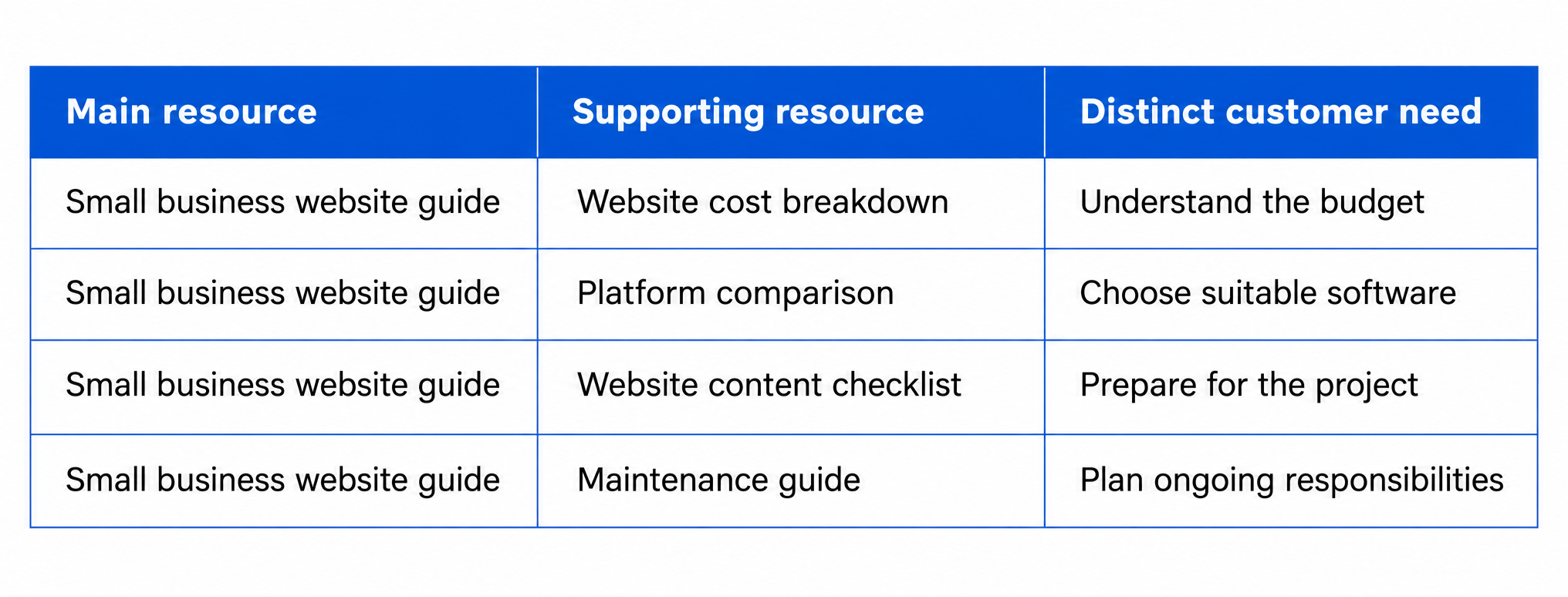
Link related resources naturally. Add firsthand examples, explain trade-offs and update information when it changes.
Google’s current guidance emphasizes original, useful perspectives and warns against creating pages for every query variation primarily to manipulate visibility.
Cover meaningful needs. Avoid publishing near-identical pages.
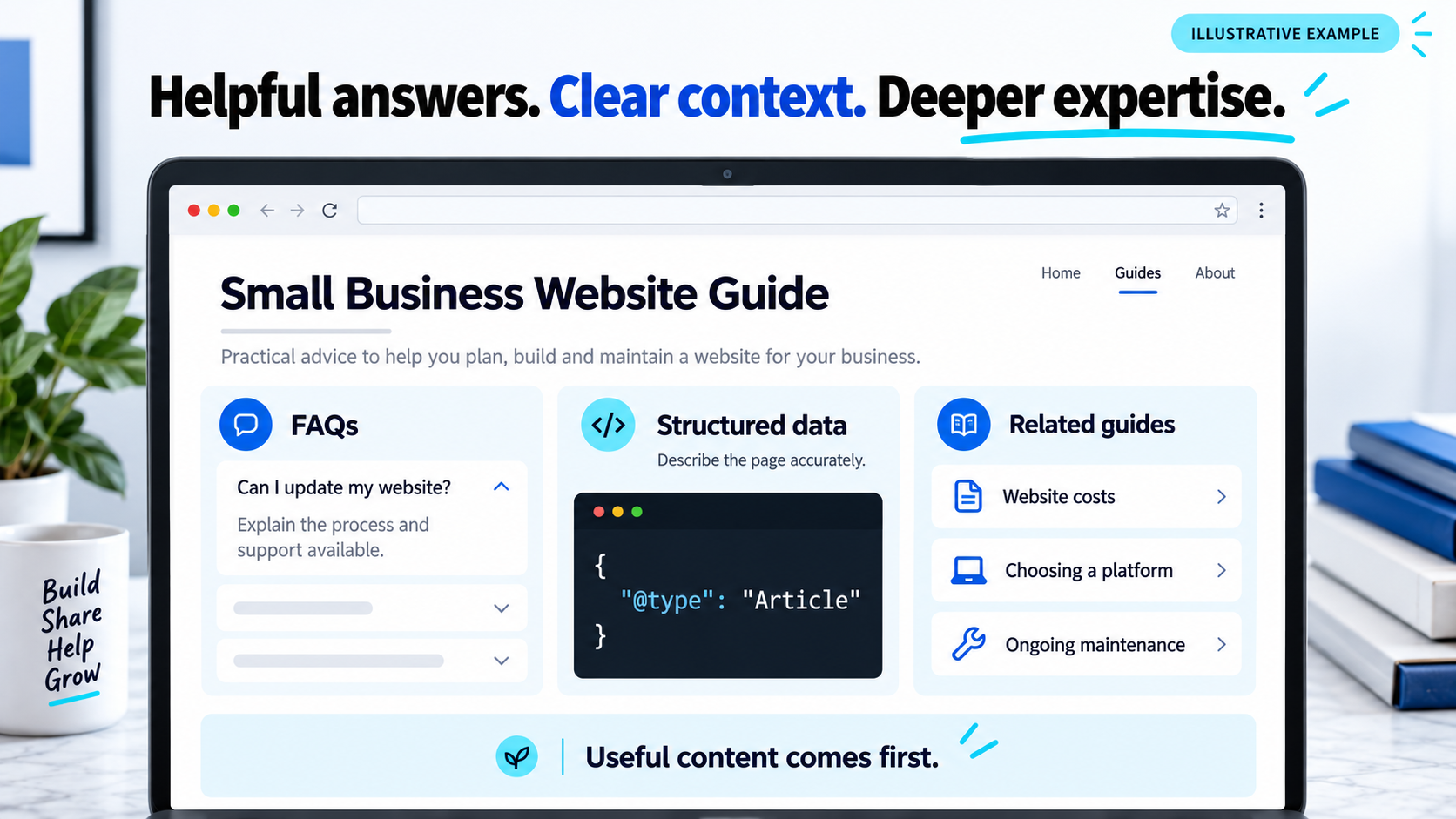
Insert the accompanying illustrative visual here.
Caption: FAQs answer specific questions, structured data describes information, and related guides help readers explore a subject.
The visual’s code fragment is conceptual, not a complete schema implementation.
How Do All Three Work Together?
Imagine a customer researching website maintenance.
Your guide explains what maintenance involves. Its FAQs address support hours and responsibilities. Relevant structured data describes the article. Links lead to a security checklist and a detailed maintenance service page.
Each element has a job. Together, they create a more useful experience.
If time is limited, work in this order:
- Improve one important page with accurate answers and evidence.
- Add missing FAQs that address genuine concerns.
- Connect supporting resources with descriptive links.
- Audit relevant schema for accuracy.
- Measure outcomes, including enquiries not just visibility scores.
Make Your Expertise Easier to Discover
Your business needs useful answers backed by knowledge people can trust.
Digital Sense can help your business work toward stronger rankings and visibility in AI search results through focused content, relevant schema markup and sound SEO creating more opportunities for customers to discover your services and helping your business grow.
Grow Your AI Search Visibility
Frequently Asked Questions
How many FAQs should a page have?
There is no required number. Three to five can be a manageable editorial starting point. Include only questions that add useful information.
Can a page appear in AI search without schema?
Yes. Google explicitly says structured data is not required for its generative AI search features. Other platforms may handle information differently.
Should every blog have an FAQ section?
No. Add one when readers have relevant unanswered questions. A complete article does not need extra FAQs simply to follow a template.
How long does building topical authority take?
There is no fixed timeline or article threshold. Focus on the usefulness, originality and credibility of your resources. Review performance over time rather than promising authority after a publishing quota.
You may also like


Want to know where your customers are slipping away?
A live look at your website, Google listing and follow-up, plus a written report in 48 hours.