 Digital Sense
You do not need to be Amazon, Forbes, or another massive website to appear in AI-powered search.
A small business website can appear in ChatGPT search results and be cited as a source. OpenAI states that any public website can potentially appear in ChatGPT search, provided its content is accessible. However, inclusion and placement are not guaranteed.
That creates an important opportunity for small businesses.
A local accountant, marketing agency, contractor, salon, law firm, SaaS company, or online retailer may not have millions of visitors. But it can still publish the most relevant and useful answer to a specific customer question.
The challenge is making your business easy for both people and AI-powered search systems to find, understand, and trust.
Can ChatGPT Actually Recommend a Small Business Website?
Yes.
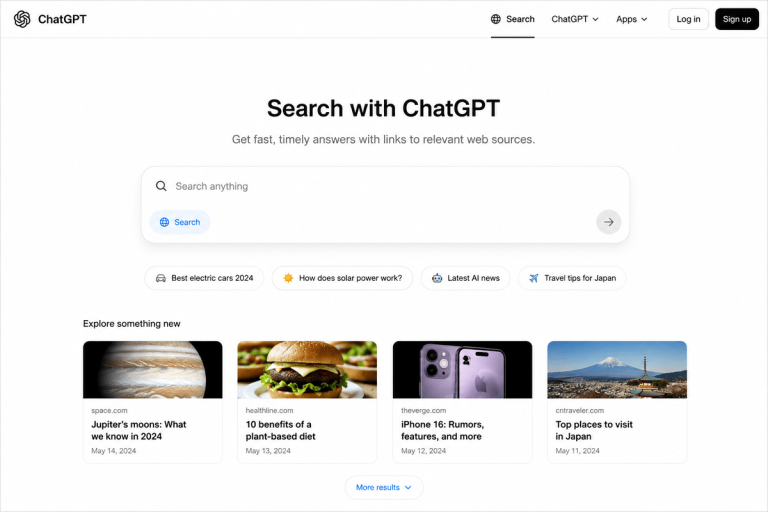
ChatGPT Search can search the live web when current information would improve an answer. It can then provide responses containing links and citations to relevant web sources. OpenAI says search results are ranked using multiple factors intended to surface relevant and reliable information.
Importantly, OpenAI does not say that only large websites qualify.
Its publisher guidance states that any public website can appear in ChatGPT search.
This means a smaller website has an opportunity when its content closely matches what someone is asking.
For example, imagine someone asks:
“What should I check before hiring a basement renovation contractor in Toronto?”
A detailed article from a Toronto contractor addressing permits, insurance, timelines, costs, common problems, and local considerations could potentially be more relevant to that question than a generic home-improvement article written for an international audience.
For small businesses, specificity can be an advantage.
Why Is ChatGPT Visibility Becoming Important for Small Businesses?
Search behaviour is becoming more fragmented.
Customers no longer discover businesses only through traditional Google results. They can find answers through maps, social media, review platforms, AI assistants, and AI-generated search experiences.
ChatGPT Search itself is widely accessible: OpenAI says web search is available across Free, Go, Plus, Pro, Business, Enterprise, and Edu plans, and can also be available to people who are not signed in.
Google’s AI-powered search experiences are changing behaviour too. A 2025 Pew Research Center analysis found that users clicked a traditional search-result link in 8% of visits when an AI summary appeared, compared with 15% when no AI summary appeared.
That does not mean traditional SEO is disappearing.
It means businesses increasingly need to think beyond:
“Can I rank on Google?”
and start asking:
“Can my business be discovered wherever customers ask questions?”
That is where SEO and AEO begin to overlap.
Does a Small Website Need High Domain Authority to Appear in ChatGPT?
There is no published minimum domain-authority score required to appear in ChatGPT Search.
In fact, “Domain Authority” itself is a third-party SEO metric, not an official ChatGPT ranking requirement.
OpenAI says ChatGPT Search uses multiple factors designed to help users find reliable and relevant information, but it does not publish a simple ranking formula or guarantee top placement.
For small businesses, that means you should not become obsessed with one SEO score.
Focus instead on building signals that make your website genuinely useful:
- Strong topical relevance
- Original expertise
- Clear business information
- Quality backlinks and mentions
- Accurate information
- Logical website structure
- Helpful customer-focused content
- Technical accessibility
A small website with 30 excellent pages can be more useful for a niche question than a huge website with thousands of shallow pages.
What Type of Small Business Content Is More Useful for AI Search?
Start with the questions customers ask before contacting you.
A plumber could publish:
“Why Does My Basement Drain Keep Backing Up?”
A dentist could answer:
“How Much Does a Dental Crown Cost in Toronto?”
A digital agency could cover:
“How Long Does Local SEO Take for a Small Business?”
A hotel linen supplier could answer:
“What GSM Towels Are Best for Hotels?”
These are much stronger AEO opportunities than repeatedly publishing generic posts such as “Why Our Company Is the Best.”
The principle is simple:
Answer the question your customer would ask ChatGPT.
Then provide enough expertise to make your answer worth using.
How Can Small Businesses Optimize Content for ChatGPT?
Traditional keyword research still matters, but conversational search requires another layer.
1. Turn Keywords Into Real Questions:
Suppose your SEO keyword is:
“SEO company Toronto”
Useful conversational queries could include:
- How much does SEO cost in Toronto?
- Is SEO worth it for a small business?
- How do I choose an SEO company?
- How long before SEO starts generating leads?
- Should a local business invest in SEO or Google Ads?
Build content around these questions.
This creates pages that align more naturally with how people communicate with AI assistants.
2. Answer the Main Question Immediately:
Do not hide the answer behind a long introduction.
If your heading is:
Can a Small Business Rank in ChatGPT?
Start with:
Yes. Small business websites can appear in ChatGPT search results, but visibility depends on factors such as relevance, reliability, accessibility, and how well the content matches the user’s query.
Then provide supporting details.
This answer-first format works well for AEO because each section has a clear question and a clear response.
3. Build Topic Clusters Around Your Expertise:
One article rarely establishes deep topical coverage.
Suppose you operate an HVAC business.
Instead of publishing unrelated blog posts, build a cluster:
Main guide:
Complete Guide to Furnace Maintenance
Supporting articles:
How Often Should a Furnace Be Serviced?
How Much Does Furnace Maintenance Cost?
Why Is My Furnace Making Noise?
Should I Repair or Replace My Furnace?
How Long Does a Furnace Last?
What Are the Signs of Furnace Failure?
Then connect related pages with internal links.
You are creating a useful knowledge base around the problems your customers actually experience.
4. Add First-Hand Experience That Generic Content Cannot Copy:
This is one of the biggest opportunities for small businesses.
Your business has something generic content generators do not automatically possess:
real experience with real customers.
Use it.
Add:
- Original photos
- Case studies
- Before-and-after results
- Expert observations
- Real project examples
- Original research
- Customer questions
- Pricing explanations
- Local knowledge
- Product testing
- Lessons learned from actual projects
Instead of writing:
“Local SEO can increase calls.”
write a case study explaining what you changed, what happened to visibility, and how enquiries changed over time.
That makes your content more distinctive and useful.
5. Make Your Business Easy to Understand:
Imagine an AI system encounters your website.
Can it quickly determine:
Who are you? What do you do? Where do you operate? Why should your information be trusted?
Make those answers clear.
Your website should include accurate:
- About information
- Services
- Service areas
- Contact information
- Author information where relevant
- Credentials and experience
- Customer reviews or testimonials
- Policies and business details
Avoid vague homepage copy like:
“We provide innovative solutions that transform possibilities.”
Say what you actually do.
“We provide local SEO and paid advertising services for small businesses across Toronto and the GTA.”
Clarity beats corporate filler.
6. Earn Mentions Beyond Your Own Website:
Your website should not be the only place where your business exists online.
Depending on your industry, relevant external signals can include:
- Business directories
- Industry associations
- Local publications
- Review platforms
- Supplier websites
- Professional profiles
- Podcasts
- Interviews
- News coverage
- Relevant blogs
These mentions can also support traditional SEO through brand awareness, citations, referral traffic, and backlinks.
For a small business, a handful of highly relevant, credible mentions may be more valuable than hundreds of low-quality directory links.
7. Make Sure ChatGPT Can Access Your Website:
This is the technical step businesses should not overlook.
OpenAI specifically advises publishers that, to help their content be discovered and surfaced in ChatGPT Search, they should ensure they are not blocking OAI-SearchBot. OpenAI also notes that website hosts or content delivery networks may need to allow traffic from its published crawler IP addresses.
So even excellent content can face a basic problem:
AI search cannot effectively surface what it cannot access.
Businesses should review:
- robots.txt
- Crawl permissions
- CDN/firewall settings
- Noindex directives
- Canonical tags
- Broken pages
- Internal linking
- XML sitemap
- Page rendering
Technical SEO and AI-search accessibility increasingly belong in the same conversation.
8. Keep Your Information Current:
AI-powered search is particularly useful for questions where people want current information.
OpenAI explains that ChatGPT can search the web when a question would benefit from timely information.
That gives businesses another reason to maintain their websites.
Review old pages for outdated:
- Prices
- Statistics
- Services
- Products
- Staff information
- Locations
- Regulations
- Software features
- Industry recommendations
Do not change the publication date just to make an old article look new.
Actually improve it.
SEO vs AEO: What Does a Small Business Need?
Ideally, both.
| SEO | AEO |
| Targets search visibility | Targets answer visibility |
| Uses keywords | Uses questions and conversational queries |
| Builds organic rankings | Builds AI discoverability |
| Focuses on webpages | Focuses on clear, useful answers |
| Builds links and authority | Builds reference-worthy information |
| Improves crawling/indexing | Improves machine understanding |
The two strategies overlap heavily.
Technical SEO, helpful content, authority, clear site structure, topical relevance, and strong brand signals can support both.
The goal is no longer simply to rank a webpage.
The bigger goal is to become a trusted source of information in your niche.
Can a Local Business Get Recommended for “Near Me” Questions?
Potentially, yes.
Location can influence ChatGPT search results. OpenAI says ChatGPT Search can use approximate location and, when users choose to share it, more precise device location to provide relevant local results.
That makes local optimization especially important for businesses such as:
- Restaurants
- Dentists
- Salons
- Contractors
- Realtors
- Accountants
- Lawyers
- Marketing agencies
- Home-service companies
Make your location and service areas clear across your website and maintain accurate business information across relevant local platforms.
AI search does not eliminate local SEO.
It makes local entity clarity even more valuable.
How Can You Tell Whether ChatGPT Is Sending Traffic to Your Website?
AI visibility should eventually connect to measurable business results.
OpenAI says publishers that allow OAI-SearchBot can track referral traffic from ChatGPT using analytics platforms.
Businesses can therefore monitor metrics such as:
ChatGPT referral traffic → engaged visitors → enquiries → leads → customers
But do not measure success using traffic alone.
Also monitor branded searches, mentions, assisted conversions, leads, and the types of questions for which your brand appears.
AI visibility should ultimately support business growth—not simply produce another dashboard metric.
Is AI Search Optimization Worth It for a Small Business?
For many businesses, yes but it should complement good SEO rather than replace it.
Search behaviour is spreading across traditional search engines and AI-powered experiences.
The strongest strategy is therefore not:
SEO or AEO.
It is:
SEO + AEO + useful content + genuine authority.
Build a technically healthy website. Answer specific customer questions. Publish original expertise. Establish your business across credible third-party sources. Make your brand and services easy to understand.
Those fundamentals make sense regardless of how search interfaces evolve.
Want Your Small Business Found in AI Search?
Being a smaller brand does not mean you have to be invisible.
Digital Sense can help build an SEO and AEO strategy designed around technical visibility, question-based content, topical authority, local search, and the changing way customers discover businesses through AI.
Grow Your AI Search Visibility
Frequently Asked Questions
Can a small business website appear in ChatGPT Search?
Yes. OpenAI states that any public website can potentially appear in ChatGPT Search. To improve eligibility, your website should be accessible to OAI-SearchBot and provide relevant, reliable information. Appearance or top placement is not guaranteed.
Do I need a high Domain Authority to get recommended by ChatGPT?
OpenAI does not publish a minimum Domain Authority requirement. Instead of optimizing around a single third-party score, focus on relevance, useful content, credible information, technical accessibility, backlinks, brand mentions, and genuine subject-matter expertise.
How can I optimize my small business website for ChatGPT?
Start with solid SEO fundamentals, then add AEO practices. Create pages around real customer questions, give concise answers, build topic clusters, publish first-hand expertise, strengthen brand signals, keep information current, and ensure AI search crawlers can access your content.
How long does it take for a website to appear in ChatGPT?
There is no guaranteed timeframe. ChatGPT Search uses multiple factors to determine which sources are relevant and reliable, and OpenAI does not guarantee placement. Focus on steadily improving your website’s accessibility, authority, relevance, and usefulness rather than expecting a fixed ranking timeline.
You may also like

Want to know where your customers are slipping away?
A live look at your website, Google listing and follow-up, plus a written report in 48 hours.