 Digital Sense
Search is changing faster than most businesses realize.
A few years ago, users searched Google, clicked websites, and compared results manually. Today, people increasingly ask AI tools like ChatGPT, Gemini, and Perplexity direct questions such as:
- “What’s the best SEO agency for local businesses?”
- “Which CRM should a startup use?”
- “Best digital marketing strategies for small businesses?”
Instead of showing 10 blue links, AI platforms now generate direct answers and recommendations.
That shift is creating a completely new opportunity for businesses.
The companies that understand How to rank in ChatGPT recommendations early may gain a massive visibility advantage in the coming years.
Traditional SEO still matters, but modern businesses now need:
- Better authority
- Better structure
- Better trust signals
- Better conversational content
This is where ChatGPT SEO and AI search optimization become essential.
What Are ChatGPT Recommendations?
ChatGPT recommendations are AI-generated suggestions based on trusted, relevant, and authoritative online content rather than simple keyword rankings.
Unlike traditional Google search, AI platforms analyze:
- Context
- Expertise
- Relevance
- Website authority
- Content clarity
- User intent
For example:
If someone asks:
“What’s the best digital marketing strategy for a local business?”
ChatGPT may recommend:
- SEO
- Local SEO
- Google Business optimization
- Content marketing
- Agencies with strong topical authority
These suggestions are influenced by what the AI system understands from online sources.
This is why businesses are now focusing heavily on:
- ChatGPT recommendations
- AI search engine optimization
- Conversational content strategies
How AI Search Engines Decide What to Recommend?
How AI systems work is the first step toward improving your visibility.
Modern AI recommendation algorithms do not simply scan for keywords. They evaluate overall content quality and trustworthiness.
Content Relevance and Context
AI systems prioritize content that directly answers user questions.
For example:
Weak Content:
“SEO is important for websites.”
Strong AI-Friendly Content:
“Local SEO helps businesses appear in nearby searches, Google Maps results, and AI-generated recommendations.”
The second example gives:
- Clear context
- Practical meaning
- Better semantic relevance
This improves ChatGPT search ranking potential significantly.
Website Authority and Trust:
AI platforms prefer trustworthy brands.
This includes:
- Expert-written content
- Backlinks from reputable sites
- Positive brand mentions
- Consistent publishing
- Strong user experience
Google’s E-E-A-T framework (Experience, Expertise, Authoritativeness, Trustworthiness) is becoming even more important for SEO for AI search.
Structured and Readable Content:
AI systems love structured content because it is easier to extract and summarize.
Content performs better when it includes:
- Clear H2/H3 headings
- Bullet points
- Tables
- FAQs
- Short answer snippets
Fresh and Updated Information
AI systems prefer current and updated information.
According to multiple SEO industry studies in 2025–2026, refreshed content can improve organic visibility by 30–60% in competitive industries.
That means outdated blogs slowly lose visibility in:
- Google AI Overviews
- AI assistants
- Conversational search tools
Build Topical Authority Around Your Niche:
One isolated blog is no longer enough.
AI systems prefer websites that deeply cover a topic from multiple angles.
This is called topical authority.
For example:
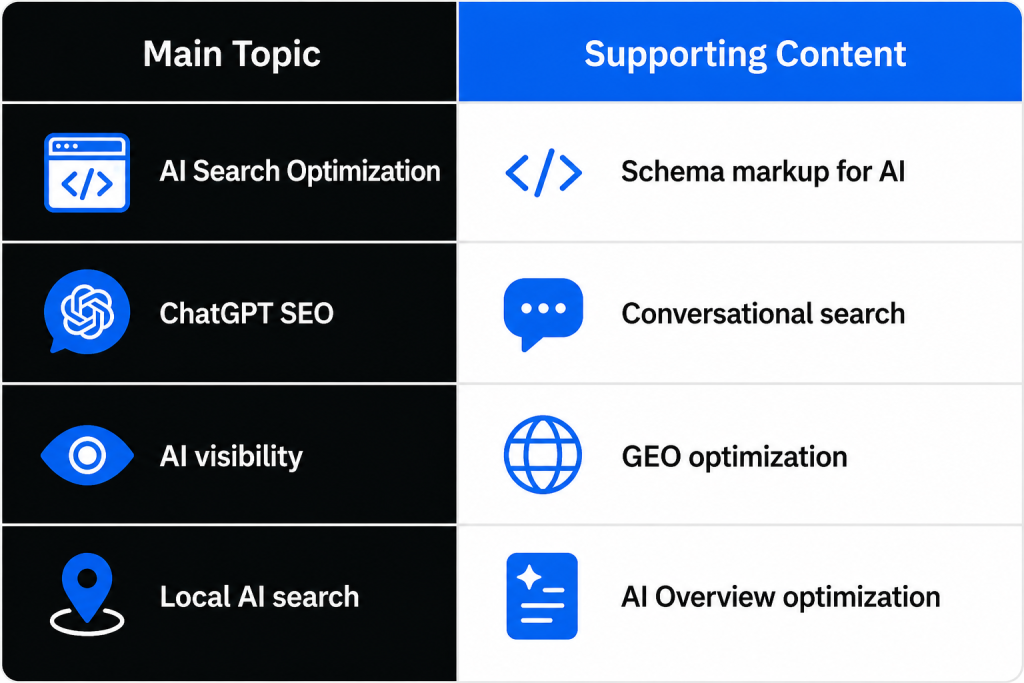
This strategy strengthens:
- Semantic relevance
- Internal linking
- Authority signals
- Crawl understanding
It also improves your chances of appearing in ChatGPT recommendations.
Why Topic Clusters Matter?
Imagine two websites:
| Website | Content Depth |
| Website A | 1 SEO blog |
| Website B | 20 interconnected AI search blogs |
AI systems are far more likely to trust Website B.
That’s because topical depth signals expertise. This is one of the biggest shifts happening in modern AI search optimization.
Optimize Content for AI Readability:
Most websites still write content only for humans or Google crawlers.
But modern AI systems also need machine-readable clarity.
Use Clear Heading Structures
Good structure helps AI understand your content faster.
Recommended structure:
- H1 → Main topic
- H2 → Major sections
- H3 → Supporting details
Poorly organized content reduces extraction accuracy.
Add Direct Answers Early:
AI platforms prefer concise answer snippets.
For example:
Question:
“How does schema markup help AI search?”
Strong Answer:
“Schema markup helps AI systems understand website content, context, and relationships more accurately.”
Simple. Clear. Direct.
This improves:
- Featured snippet opportunities
- AI extraction
- ChatGPT search ranking
Use Tables and Lists:
AI systems process structured formats efficiently.
Here’s an example:
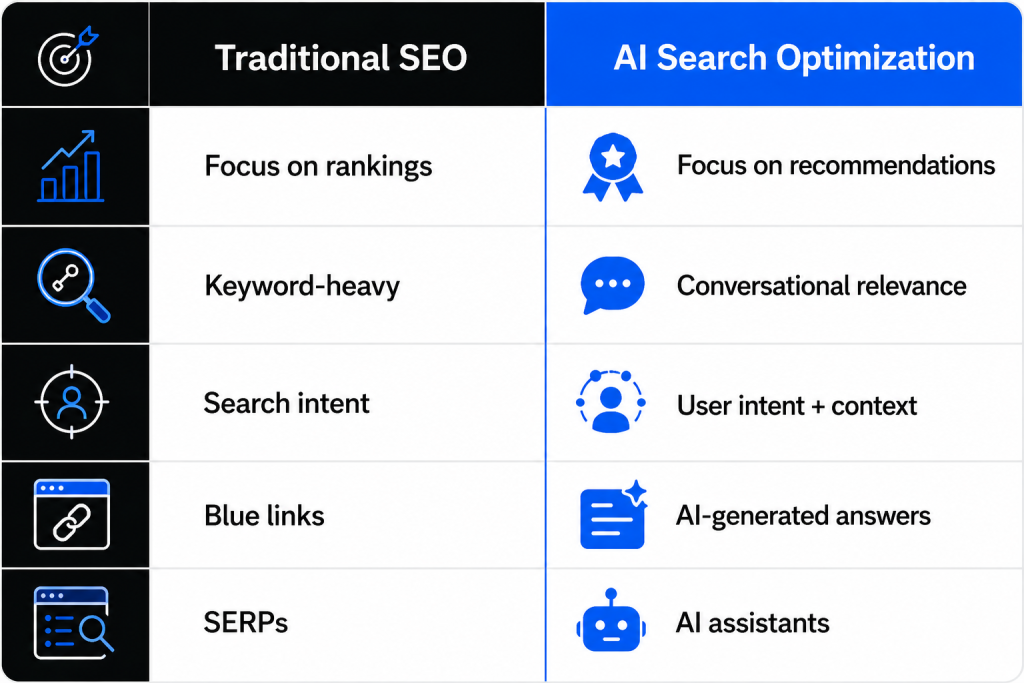
This is why modern businesses now invest heavily in:
- AI search engine optimization
- Structured content systems
- Conversational SEO
Why Schema Markup Matters for ChatGPT SEO?
Schema markup acts like a translator between your website and AI systems.
It helps AI understand:
- Who you are
- What your business does
- Your services
- FAQs
- Reviews
- Locations
Important schema types include:
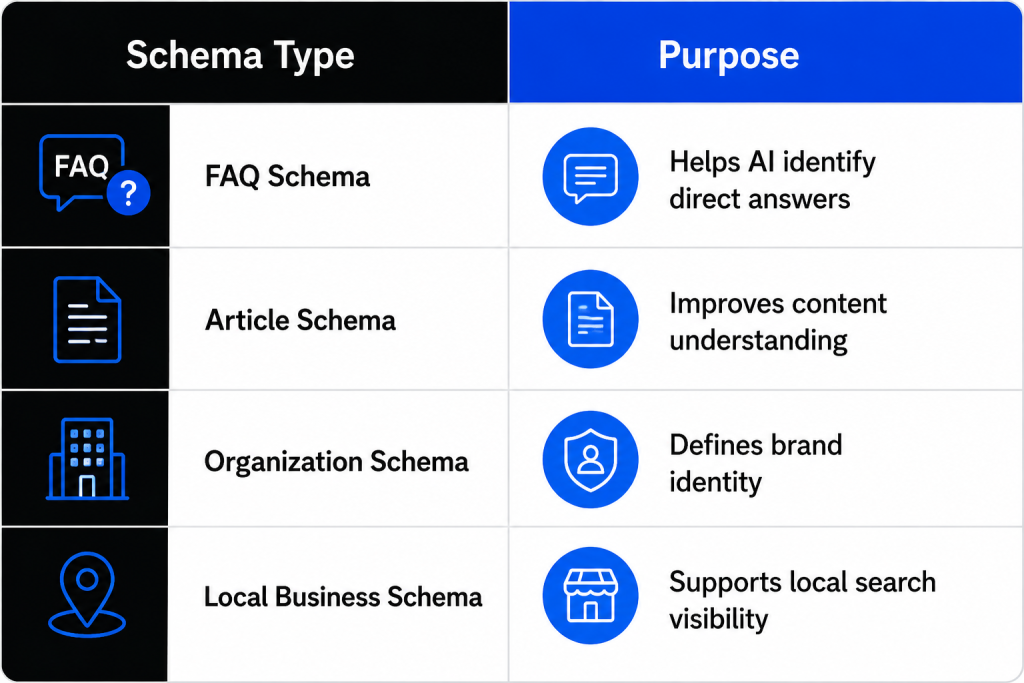
Businesses investing in ChatGPT SEO strategies often see stronger visibility across AI-powered search environments.
Brand Mentions and Digital Authority Matter More Than Ever:
Many businesses underestimate the power of brand recognition.
But modern AI recommendation algorithms rely heavily on authority signals across the web.
These include:
- Mentions on trusted websites
- Social discussions
- Reviews
- Citations
- PR coverage
- Backlinks
For example:
If multiple authoritative sources mention your business positively, AI systems are more likely to trust your brand.
This directly impacts:
- ChatGPT recommendations
- AI-generated search visibility
- Conversational search exposure
Common Mistakes Preventing Websites From Appearing in AI Recommendations:
Many websites unintentionally reduce their AI visibility.
Here are some common issues:
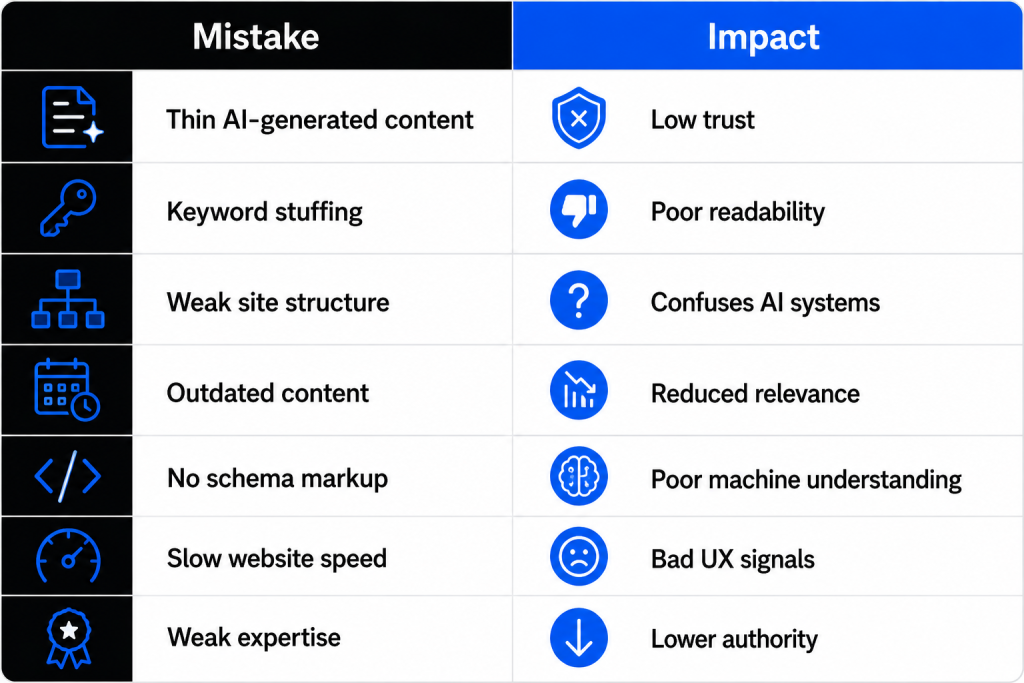
Businesses that avoid these mistakes usually perform better in SEO for AI search environments.
The Future of SEO Is AI Visibility:
The future of search is no longer just about rankings.
It’s about recommendations.
AI assistants are becoming:
- Discovery engines
- Shopping advisors
- Research assistants
- Decision-making tools
According to Gartner forecasts, traditional search engine traffic may decline significantly as users shift toward AI-generated answers over the next few years.
That means businesses must prepare for:
- Conversational search
- Generative Engine Optimization (GEO)
- AI-first content strategies
- Entity-based SEO
- Contextual relevance
Brands investing early in how to rank in ChatGPT recommendations strategies may gain a major competitive edge before the space becomes saturated.
Practical Steps to Improve AI Search Visibility:
Here’s a simple roadmap businesses can follow:
| Action | Benefit |
| Create topic clusters | Builds authority |
| Add schema markup | Improves AI understanding |
| Publish expert content | Increases trust |
| Update old blogs | Maintains freshness |
| Use conversational language | Matches AI queries |
| Improve UX and speed | Better engagement signals |
| Build backlinks | Stronger authority |
This combination strengthens:
- AI search optimization
- ChatGPT search ranking
- Overall digital visibility
How Digital Sense Helps Businesses Improve AI Visibility?
Modern search requires more than traditional SEO tactics.
Businesses now need:
- AI-ready content
- Structured information
- Conversational optimization
- Authority-building strategies
- Technical SEO improvements
Digital Sense helps businesses prepare for the future of search through:
- SEO + AEO strategies
- AI-focused content structures
- Schema implementation
- Local SEO optimization
- AI visibility consulting
- Content authority building
Whether you want stronger rankings, better AI visibility, or improved online authority, Digital Sense helps brands adapt to the next generation of search.
Conclusion:
AI search is fundamentally changing how people discover businesses online.
Ranking on Google alone is no longer enough.
Businesses now need:
- Authority
- Trust
- Structured content
- Conversational optimization
- Technical clarity
Understanding How to rank in ChatGPT recommendations is quickly becoming a major competitive advantage.
The brands that adapt early to:
- ChatGPT recommendations
- AI search engine optimization
- SEO for AI search
will likely dominate the future digital landscape.
FAQs
Can websites rank directly in ChatGPT recommendations?
Yes. Websites with authoritative, relevant, structured, and trustworthy content are more likely to appear in AI-generated recommendations.
What is ChatGPT SEO?
ChatGPT SEO focuses on optimizing content for AI-generated answers and conversational search experiences rather than only traditional search rankings.
How important is schema markup for AI visibility?
Schema markup is extremely important because it helps AI systems better understand your website’s content, context, and business information.
How long does AI search optimization take?
Like traditional SEO, AI search optimization takes time. Most businesses see gradual improvements over several months depending on content quality, authority, and consistency.
You may also like



Want to know where your customers are slipping away?
A live look at your website, Google listing and follow-up, plus a written report in 48 hours.